

.svg)
10 Hadith and Qur’anic Reminders on Service

Behind every Eid hamper and Qurbani delivery are quiet heroes whose worship looks like spreadsheets, phone calls, and late‑night service.
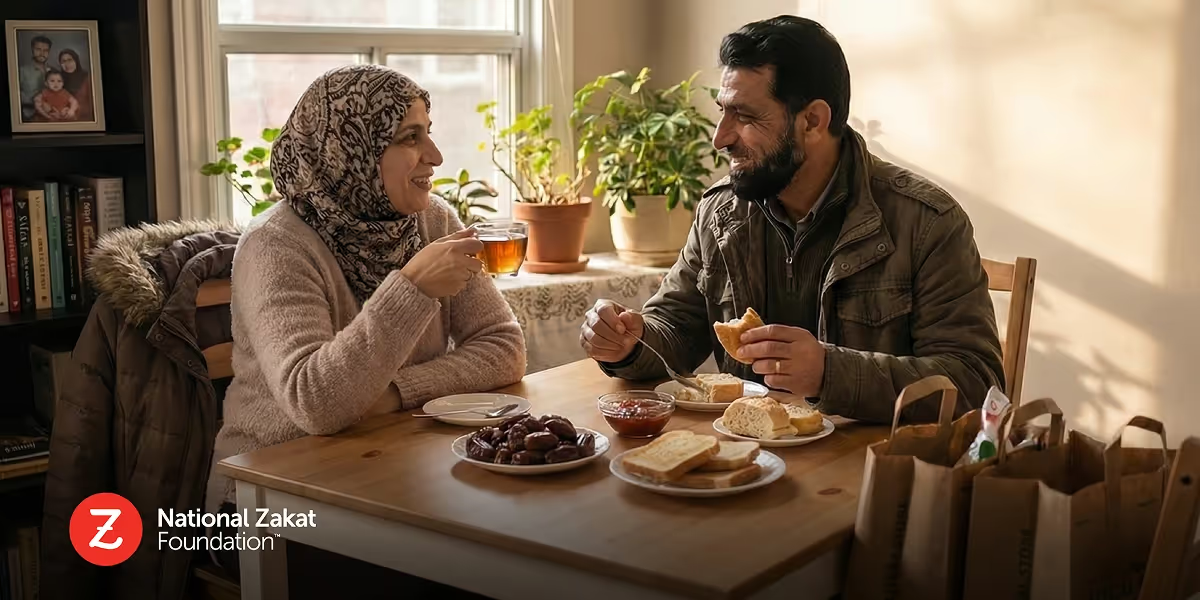
Eid al‑Adha brings takbeers, family gatherings, and shared meals—but for some, it begins with a phone call asking for urgent help. Between those calls and the relief that reaches households are countless unseen hands, hearts, and late‑night efforts that keep our communities standing.
Below are 10 Qur’anic ayahs and hadith that speak to the quiet, often hidden work of volunteers, caseworkers, and community connectors—along with a practical invitation to stand alongside them this Dhul Hijjah.
Serving Only for Allah
The Qur’an praises people who give purely for Allah: “They give food, in spite of love for it, to the needy, the orphan, and the captive, [saying], ‘We feed you only for the Face of Allah; we desire from you neither reward nor thanks.’” (Qur’an 76:8–9)
This is the spirit behind so much of NZF’s local work—packing food, delivering Qurbani, and processing applications not for recognition, but as quiet acts of worship that Allah sees fully.
Allah Is Ever‑Seeing of the Hidden Work
Many steps in community work are invisible to the public: intake forms, late‑night calls, difficult funding decisions. The Qur’an reminds us that “Allah is Ever Seeing of [His] servants” (Qur’an 40:44) and “He will never let your deeds go to waste” (Qur’an 47:35).
For the person driving across town with a food box or staying late to finalize a case, this ayah is a comfort: nothing done sincerely is wasted, even if no one else knows.
One Ummah, One Body
The Prophet ﷺ said the believers are like one body; when one part is in pain, the rest shares in sleeplessness and fever (Bukhari, Muslim).
This hadith comes to life in caseworkers and volunteers who carry people’s stories home—worrying about a family facing eviction, or making dua in the last third of the night for someone who just lost their job.
Relieving Hardship Brings Relief in the Hereafter
The Prophet ﷺ said: “Whoever relieves a believer of one of the hardships of this world, Allah will relieve him of one of the hardships of the Day of Resurrection.” (Muslim)
Every time a bill is covered, an emergency food hamper goes out, or a newcomer is guided through a confusing system, that promise is in the background—Allah sees and repays every effort to ease another’s burden.
Being the Most Beneficial People
The Prophet ﷺ taught that “the most beloved people to Allah are those who are most beneficial to people,” and that among the best deeds is to make a Muslim happy, remove a trouble, forgive a debt, or feed their hunger (Tabarani).
Volunteers who pack Qurbani meat, translate for clients, or help run community service programs live these teachings in practical, local ways - turning compassion into action in cities across Canada.
Kind Words and Dignity in Giving
The Qur’an tells us that “kind speech and forgiveness are better than charity followed by injury.” (Qur’an 2:263)
For people on the front lines, this means more than just “helping.” It means protecting a client’s privacy and treating each person—parent, student, elder—with the honour they deserve, especially when they’ve already exhausted every other option.
Strengthening One Another Like a Building
“The believer to the believer is like a building, each part strengthening the other,” the Prophet ﷺ said, interlocking his fingers (Bukhari, Muslim).
Those who serve need support too: a listening ear, sincere dua, reminders to rest, and a community that stands behind them with consistent giving. Supporting the helpers is itself a form of service.
Even a Smile Is Charity
The Prophet ﷺ reminded us that “your smile in the face of your brother is charity.” (Tirmidhi)
We may not all manage complex cases, but we can show up to volunteer shifts with warmth, greet clients kindly, and make Eid spaces feel welcoming—especially for those who have felt isolated or unseen.
Guiding to Good Shares the Reward
“Whoever guides to good has a reward similar to the one who does it,” the Prophet ﷺ said (Muslim).
If you encourage a friend to volunteer, share an NZF campaign, or connect someone in need to available support, you share in the reward of every box delivered, every Eid joy sparked, and every heart eased through that connection.
Show Up in Whatever Way You Can
Some can give money; others can give time, skills, or simply dua. The Prophet ﷺ said, “Protect yourself from the Fire, even with half a date.” (Bukhari, Muslim)
This Dhul Hijjah, consider one concrete step: a volunteer shift, a recurring donation, or actively checking on someone who might be struggling. Small, sincere actions, especially when done locally, can ripple out further than you realize.
If you’d like to be one of these quiet heroes, you can:
- Learn about volunteering with NZF Canada
- Explore Dhul Hijjah local efforts and needs
Your time, skills, and presence can help turn Eid from a stressful time into a season of relief and dignity for vulnerable Muslims across Canada.

recent news
The Latest Updates in Our Organization
Here you will find updates on the latest happenings and developments at National Zakat Foundation Canada.