

.svg)
Eid al‑Adha in Canada: Keeping Sacrifice Close to Heart, Close to Home

Eid al‑Adha reaches Canadian Muslims in the middle of everyday life—work shifts, rent payments, and family routines—yet it remains a powerful chance to renew our trust in Allah and stand with neighbours in need, keeping sacrifice close to heart and mercy close to home.
Eid al‑Adha in Canada
In many parts of the world, Eid al‑Adha is felt in the streets: the sound of takbeers, the sight of pilgrims, and the visible movement of Qurbani. However, for most Muslims in Canada, Eid al-Adha arrives more quietly and often without as much anticipation and build up as Eid al-Fitr; through alarms going off for work, kids getting ready for school, and notifications about bills and appointments.
Yet even here, in apartment buildings, townhouses, and suburbs across the country, Eid al‑Adha carries the same core message: that true sacrifice is about the heart. It is about trusting Allah when life feels uncertain, and making sure that families facing hardship in our own cities are not left to spend Eid alone with empty fridges and heavy worries.
This year, Eid al‑Adha is an invitation to ask: How can we keep our worship close to heart, and our mercy close to home?
When is Eid al‑Adha 2026 in Canada?
In 2026, Eid al‑Adha in Canada is expected to fall near the end of May, corresponding to the 10th of Dhul Hijjah in the Islamic calendar. Because the Islamic months follow the moon, the exact day will be confirmed by local moonsighting and announcements from Canadian mosques and councils.
What you can do now is:
- Mark the expected dates in your calendar.
- Plan time off for Eid prayer if you need to request it in advance.
- Start thinking about Qurbani and Dhul Hijjah giving early, so you are not rushed when the month begins.
What is Eid al‑Adha?
Eid al‑Adha, the “Festival of Sacrifice,” commemorates Hajj and the story of Allah (SWT) commanding Prophet Ibrahim (AS) to sacrifice his beloved son Prophet Ismaeel (AS) as one of the clearest examples of trust, obedience, and sacrifice in our tradition. Allah does not need anything from us; He honours us by giving us opportunities to draw closer to Him through acts like Hajj, Qurbani, charity, and service.
For us today, that sacrifice may look like:
- Giving from a budget that already feels tight.
- Letting go of an old grudge for Allah’s sake.
- Sacrificing our rest as we care for little children.
- Choosing to show up for someone who has no one else.
The Qur’an reminds us that the meat and blood of our sacrifices do not reach Allah; what reaches Him is our Taqwa (God‑consciousness). When we arrange Qurbani, attend Eid prayer, or share a meal, the real question underneath is: What am I willing to give up for Allah, and who am I willing to stand beside in my own community?
The Significance of Eid al‑Adha
The heart of Eid al‑Adha is not only the sacrifice itself, but what it does to our hearts:
- It renews our trust in Allah when the future feels uncertain.
- It softens us toward people who are struggling quietly.
- It reminds us that comfort in this life is temporary, but what we give for Allah remains.
In a Canadian context, where many of us balance Islam with work, school, and life in a secular environment, Eid al‑Adha becomes a yearly checkpoint. We are asked: Are we willing to sacrifice our time, wealth, and habits for Allah, even when no one else sees it?
How do Muslims Celebrate Eid al‑Adha in Canada?
Across Canada, Eid al‑Adha is celebrated in ways that blend our faith with local realities—shift work, school terms, summer programs, and long commutes. Even when the day feels short or busy, there are simple, meaningful ways to honour it.
Common practices include:
- Eid prayer: Attending the congregational prayer at the mosque, an Islamic centre, a rented hall, or an outdoor field where the community gathers.
- Takbeerat: Filling homes, cars, and prayer spaces with the takbeers of Eid, especially in the nights and mornings around the day.
- Qurbani (Udhiya): Arranging the sacrifice of an animal and distributing the meat to family, friends, and people in need
- Family and community time: Wearing one’s best clothes, sharing meals, visiting relatives and friends, and letting children feel that Eid is special.
- Charity and service: Supporting local food programs and foodbanks so that households under financial pressure can still enjoy the day with dignity.
For Muslims who are working or studying on Eid, celebration might be a shorter breakfast, a family dinner after work, or a visit to parents or grandparents in the evening. The length of the day does not define its worth, your intention and effort do.
Eid al‑Adha in a Time of Rising Costs
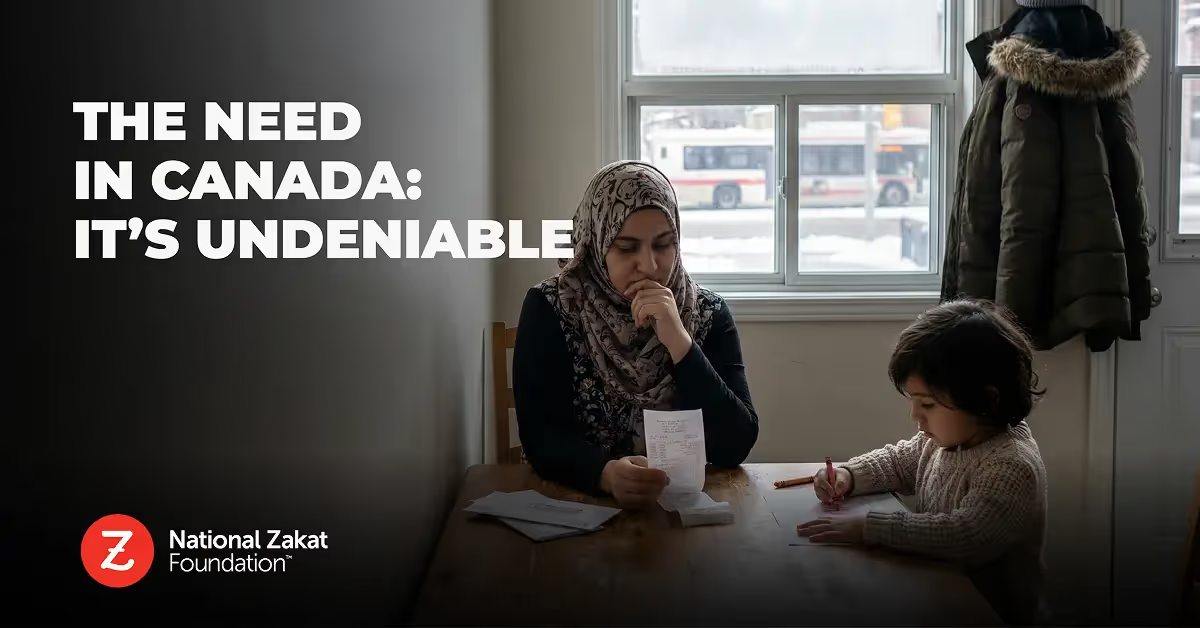
Across Canada, many households are navigating a cost of living that keeps increasing—rent, groceries, transportation, and utilities have become heavier burdens for families, students, seniors, and newcomers. In that context, Eid can feel challenging.
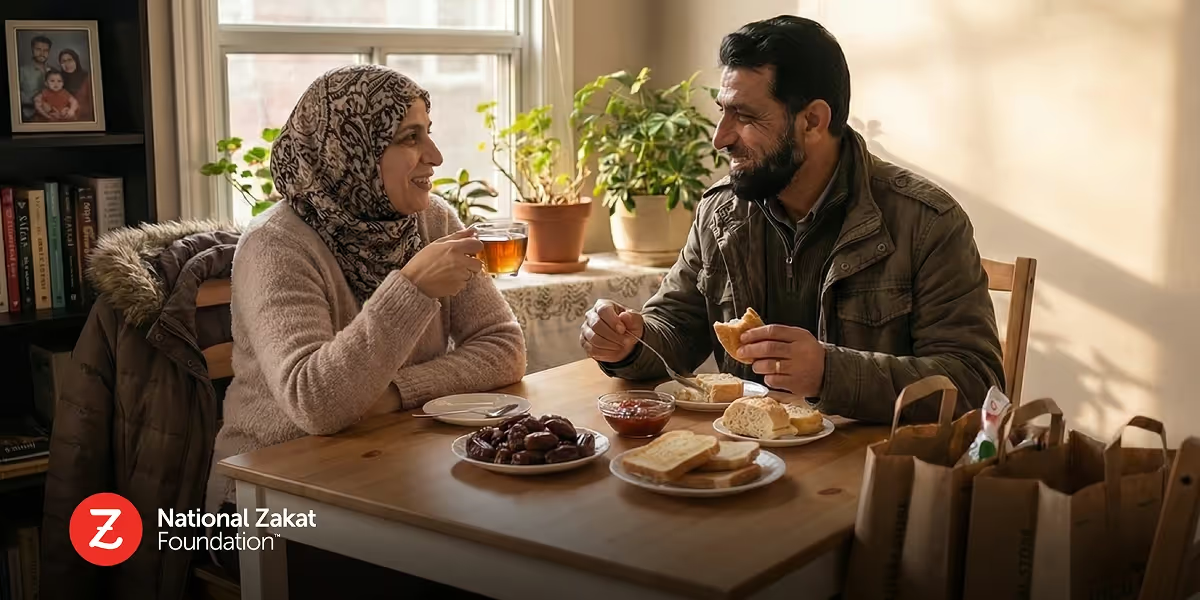
Some parents quietly wonder how to afford new clothes, special food, or gifts for their children. Others are deciding between paying a bill and buying meat for Eid. For many, Eid is a day when the gap between “how things look” and “how things feel” at home becomes especially wide.
In this reality:
- Qurbani is not a luxury; it can be the one time a family has enough meat to share a proper Eid meal.
- A local Eid hamper or grocery card can mean that a single mother does not have to choose between a special day for her kids and keeping the lights on.
- A simple check‑in can be the difference between someone spending Eid in silent stress and feeling remembered.
When Qurbani and Eid giving stay local, your sacrifice becomes part of a safety net for households who are close by, even if you never see their names. That is the heart of “close to home.”
When is the Day of Arafah 2026?
The Day of Arafah is the 9th of Dhul Hijjah, the day before Eid al‑Adha and the central day of Hajj. In 2026, it will also fall near the end of May, just before Eid, with the exact date tied to moonsighting and the start of the month.
For Canadian Muslims not on Hajj, Arafah is one of the most spiritually powerful days of the year. It is an opportunity to cleanse the heart, renew our repentance, and stand wherever we are, with the Hajj pilgrims in remembrance of Allah, and heartfelt du‘a.
The importance of the Day of Arafah
The Day of Arafah is special because:
- It is the day when pilgrims stand at Arafah, and Hajj is not complete without it.
- It is a day on which Allah frees the most people from the Fire and accepts sincere repentance.
- Fasting on Arafah (for those not on Hajj) is highly rewarded and associated in the Sunnah with the forgiveness of sins by Allah’s mercy.
Even far from Makkah, a Muslim in Canada can be deeply connected to that sacred moment. The du‘a you make on Arafah from a small apartment, a break room, or your car can still be raised to the same Lord who hears the du‘as of those standing in worship on the plain of Arafah.
What To Do on the Day of Arafah?
If you are not on Hajj, you can still make Arafah a turning point in your year.
Some practical actions:
- Fast on the Day of Arafah if you are able.
- Set aside focused time for du‘a, especially in the last part of the day.
- Increase dhikr—saying SubhanAllah, Alhamdulillah, La ilaha illa Allah, and Allahu Akbar.
- Make sincere tawbah from past sins and ask Allah for a fresh start.
- Give charity, even a small amount, with the intention of drawing closer to Allah.
What To Do During the Days of Dhul Hijjah
The first ten days of Dhul Hijjah are among the best days of the year. Even if you are not on Hajj, you can fill them with acts that bring you closer to Allah.
Here are some ideas:
- Protect the basics: Guard your five daily prayers and try to pray them on time.
- Add small extras: Read a regular portion of Qur’an, pray some extra sunnah or nafl prayers, or establish a simple dhikr routine on your commute.
- Fast where you can: Many Muslims try to fast some or all of the first nine days, especially the Day of Arafah.
- Plan your Qurbani early: Arrange your sacrifice through a trusted local organization so that meat reaches families in need at the right time.
- Give consistently: Set aside something for Sadaqah and Zakat, even if the amount feels small, and try to give it regularly.
- Reach out: Make a list of people who might be more isolated—elders, widows, students, or newcomers—and check in on them at least once during these days.
Learn more how to take advantage of these best days with your free Dhul Hijjah guide.
Bringing the Meaning of Eid al‑Adha into Your Home
Even if you are not on Hajj, and even if you are working or studying on Eid, you can still bring the spirit of this day into your home.
Try to:
- Start Eid with intention: Before Eid day, set the intention that your Qurbani, your prayers, and your family time are for Allah’s sake. Ask Him to accept even if your Eid looks “small” on the outside.
- Mark the day in your own way: Attend Eid prayer if you can, or follow along online if you are unable to go in person. Fill your home with takbeers, wear something a bit special, and prepare a simple breakfast, lunch, or dessert that feels different from everyday meals.
- Share the story of sacrifice: Talk with children, siblings, or friends about Prophet Ibrahim’s (AS) trust in Allah and connect it to your life: “What is one habit, fear, or grudge we want to let go of this year?”
- Celebrate within your means: A modest meal, one thoughtful gift, or a shared outing—like a walk in a nearby park—can still create beautiful memories. Eid is not measured by how much you spend, but by how present your heart is.
If you live alone, consider inviting a friend, student, or neighbour who might otherwise spend Eid by themselves. If that is not possible, schedule calls with loved ones and plan at least one small act of giving. You are not invisible to Allah on this day.
Ensuring No One is Left Behind on Eid
Eid al‑Adha is a time when the entire Ummah is called to think beyond themselves. Part of the wisdom of Qurbani is that it turns worship into nourishment for others who are struggling right here in our own communities. In Canada, that can include:
- Families relying on food banks, where meat is rarely available.
- Newcomers starting over from scratch with limited support.
- Seniors on fixed incomes quietly cutting back on nutrition to keep up with rent.
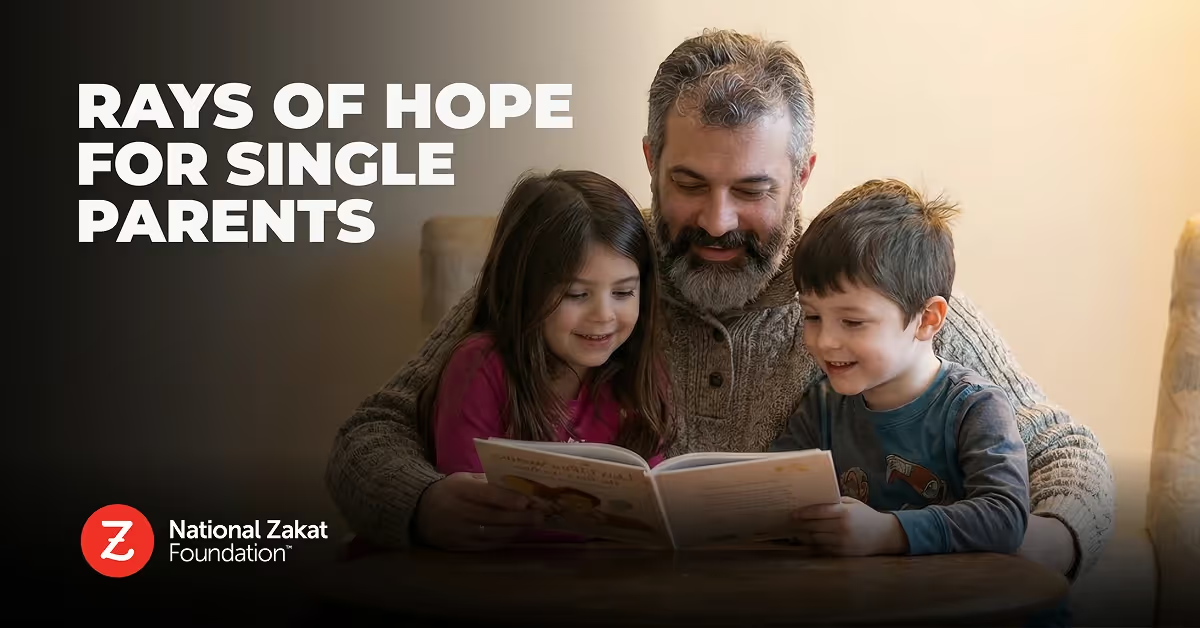
- Single parents juggling childcare, work, and bills with little backup.
When you give your Qurbani or Eid charity through a trusted local organization, you help ensure that:
- Meat and essentials reach households facing real hardship.
- Support is given with dignity, privacy, and cultural sensitivity.
- Eid feels like a day of relief, not just another reminder of what is missing.
Your contribution becomes a bridge between your intention and their reality—between what you say in du‘a and what someone else finds in their kitchen on Eid morning.
Turning Eid Inspiration into Everyday Practice
The real test of our imaan begins once we return to our regular routines.
You can carry the spirit of Eid al‑Adha forward by:
- Preserving one act of worship: Choose something small and realistic—a short daily portion of Qur’an, extra sunnah prayers a few times a week, or regular dhikr during your commute.
- Maintaining a habit of giving: Consider setting up a modest monthly donation that you barely notice, but that provides stable support for families in crisis. Even a small amount can be transformative when it is consistent.
- Checking in regularly: Make a mental list of people who may be more isolated—elders, students far from family, widows, or newcomers—and set a reminder to reach out from time to time, not just on special days.
In this way, Eid al‑Adha becomes a turning point, not just a highlight. The lessons of sacrifice, trust, and compassion start to show up in how you spend your days the rest of the year.
Keeping Your Eid Close to Heart, Close to Home
Eid al‑Adha is a gift: a chance to renew our relationship with Allah and to stand with those who are quietly struggling in our own communities. When you:
- Intend your Qurbani purely for Allah
- Remember families facing hardship
- Take small, steady steps to support them
you live the meaning of this Eid—keeping your worship close to heart, and your mercy close to home.
May Allah accept your sacrifices, fill your home with contentment, and make this Eid a source of relief and joy for you and for your neighbours across Canada.
Turn your Eid intentions into local impact
If you would like your Eid al‑Adha to benefit vulnerable Muslims close to home, you can:
- Arrange your Qurbani locally so your sacrifice reaches families in need across Canada.
- Give Zakat and Sadaqah in the best days of Dhul Hijjah to support food, housing, and essentials for neighbours facing hardship.
- Schedule your Dhul Hijjah giving so your support continues consistently, even when life is busy.
Each step helps ensure that the spirit of Eid al‑Adha does not end with the day itself—it continues close to heart, close to home, through worship, generosity, and steady care for your community.

recent news
The Latest Updates in Our Organization
Here you will find updates on the latest happenings and developments at National Zakat Foundation Canada.