

.svg)
What to Do on the Day of Arafah: A Checklist

The Day of Arafah is when millions stand on the plains of Arafah, seeking Allah’s mercy and forgiveness. For Muslims in Canada who are not at Hajj, this day is still a priceless opportunity: to fast, make abundant dua, renew tawbah, and remember those around us who are struggling. With a little planning, you can turn this single day into a powerful reset for your heart, your habits, and your connection to your community.
Why Arafah Matters So Much
The Day of Arafah is the heart of Hajj and the best day of the entire year, a time when Allah’s mercy overflows and countless people are freed from the Fire. Even if you are not standing on the plains of Arafah, you can still share in the blessings by dedicating the day to worship, seeking forgiveness, and sincere dua.
For Muslims in Canada, Arafah often falls on a regular work or school day, which can make it feel harder to honour. Planning ahead—spiritually and practically—allows you to experience the sweetness of this day while still meeting your responsibilities.
The Night Before: Intention and Preparation
From Maghrib the night before Arafah, begin with a clear intention for the coming day. Take a few quiet minutes to review your schedule, decide when you will wake up, and set goals for fasting, Quran, dhikr, and dua.
Try to go to sleep a little earlier so you can wake up for Fajr with a refreshed mind. If possible, prepare simple suhoor and meals in advance so you are not distracted by cooking or shopping while fasting. Arafah comes only once a year—treat it as an appointment with Allah that you do not want to miss.
Fajr to Mid-Morning: Grounding Your Day
After Fajr, spend a few minutes in quiet reflection and remembrance. Read a portion of Quran, even if it is small, and make dua for a beneficial, protected day. If you are fasting, ask Allah to make it easy and accepted.
If you are heading to work or school, take advantage of your commute by listening to a reminder about Arafah or making dhikr. Aim to protect your tongue from gossip and empty talk; let your words be filled with remembrance, gratitude, and kindness.
Midday: Balancing Work and Worship
Many people in Canada will be at their desks, in classrooms, or caring for family during Arafah. You can still honour the day by using small pockets of time wisely:
- Keep your phone background or notebook marked with a short dua to repeat throughout the day.
- Use breaks to recite dhikr and istighfar instead of scrolling aimlessly.
- If possible, pray Dhuhr and Asr on time, calmly and with focus, even if you must find a quiet corner or room.
If you are unable to fast due to health, pregnancy, or another valid reason, know that Allah still sees your efforts. Focus on increased dhikr, charity, and heartfelt dua—your share of this day is not lost.
Afternoon: Arafah as a Day of Dua
The time between Dhuhr and Maghrib on Arafah is especially precious. If you can take some time off or reduce your commitments during these hours, do so. Find a quiet place—at home, in the masjid, or even in your car—and dedicate a block of time to dua.
You may find it helpful to write a dua list beforehand, including:
- Your relationship with Allah: guidance, sincerity, and a good ending.
- Your personal struggles: faith, family, mental health, work, and studies.
- Your loved ones: parents, spouse, children, friends, and neighbours.
- The Ummah: those facing war, displacement, poverty, and injustice.
- Your community in Canada: families in housing stress, newcomers, elders, and youth.
Alternate between praising Allah, sending salawat upon the Prophet ﷺ, asking for forgiveness, and making specific duas. Allow yourself to be honest and vulnerable; this is a day for pouring your heart out.
Remembering Those in Need on Arafah
Arafah is not only about private worship; it is also a reminder to stand with those going through hardship. Before the day arrives, think of at least one person or family in your city who may be struggling—someone who has mentioned difficulty, disappeared from gatherings, or seems more withdrawn than usual. Include them by name in your duas.
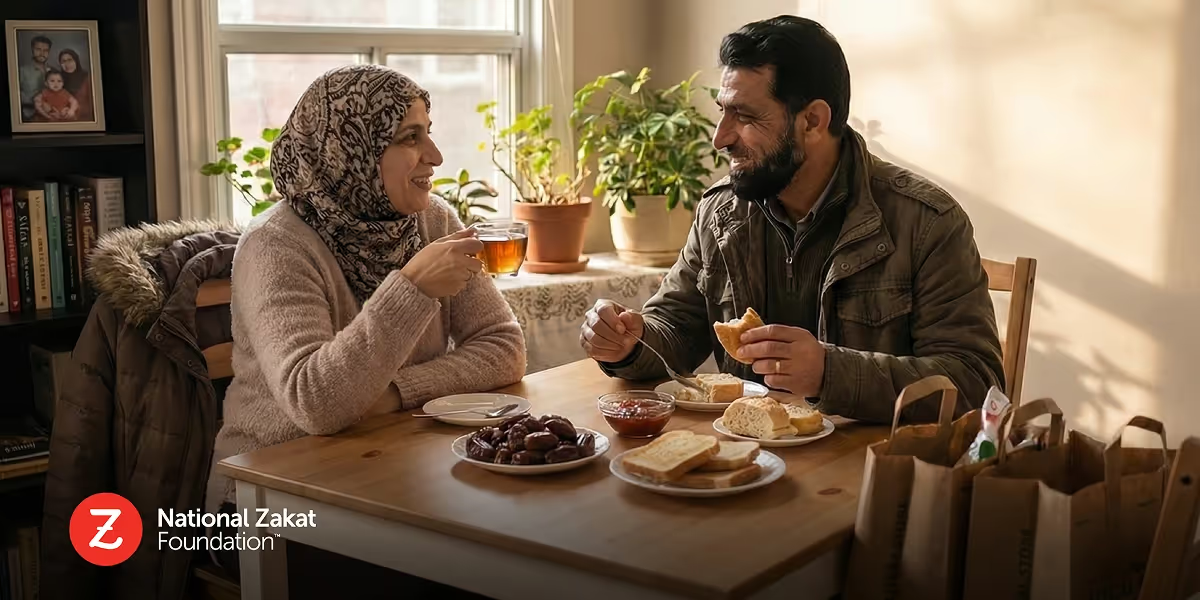
If you are able, pair your dua with an act of support: a message to check in, a meal drop-off, or a contribution through a trusted local charity that is actively helping Muslims in financial difficulty across Canada. Even a modest act of giving on Arafah can ease someone else’s burden while drawing you closer to Allah.
Asr to Maghrib: Finishing Strong
As the day draws to a close, many pilgrims at Arafah are standing, weeping, and begging Allah for His mercy. Wherever you are, try to mirror that earnestness in your own way. If possible, set aside the last hour before Maghrib solely for dua and dhikr, minimizing distractions.
You might stand, sit, or raise your hands—whatever helps you feel present. Repeat words of tawheed, ask for forgiveness for the past and protection for the future, and beg Allah to accept your efforts not only on this day, but for the rest of the year.
After Maghrib: Gratitude and Gentle Reflection
Once Arafah ends and you break your fast (if you were fasting), take a few moments to reflect. What did this day reveal about what you truly want from Allah? Which duas felt the most urgent? Which habits or sins are you now more determined to leave behind?
Write down a few key intentions for the months ahead: a spiritual habit you want to continue, a relationship you want to repair, and a consistent way you hope to support others in need. In this way, the blessings of Arafah do not end at sunset; they ripple into every ordinary day that follows.
Even if your day did not go exactly as planned, trust that Allah knows your circumstances and your efforts. Return to Him with hope, ask Him to accept whatever you were able to do, and believe that no sincere moment on this day goes unnoticed with Him.
Pairing Your Arafah with Local Impact
If you would like to pair your worship on Arafah with concrete support for Muslims in need across Canada, you can:
- Arrange or top up your Qurbani so your sacrifice helps families locally:
- Give Zakat and Sadaqah around Arafah and Dhul Hijjah to support housing, food, and essentials for neighbours in difficulty:
In doing so, your Arafah becomes not only a day of personal renewal, but also a day when mercy is shared—close to heart, and close to home.

recent news
The Latest Updates in Our Organization
Here you will find updates on the latest happenings and developments at National Zakat Foundation Canada.